
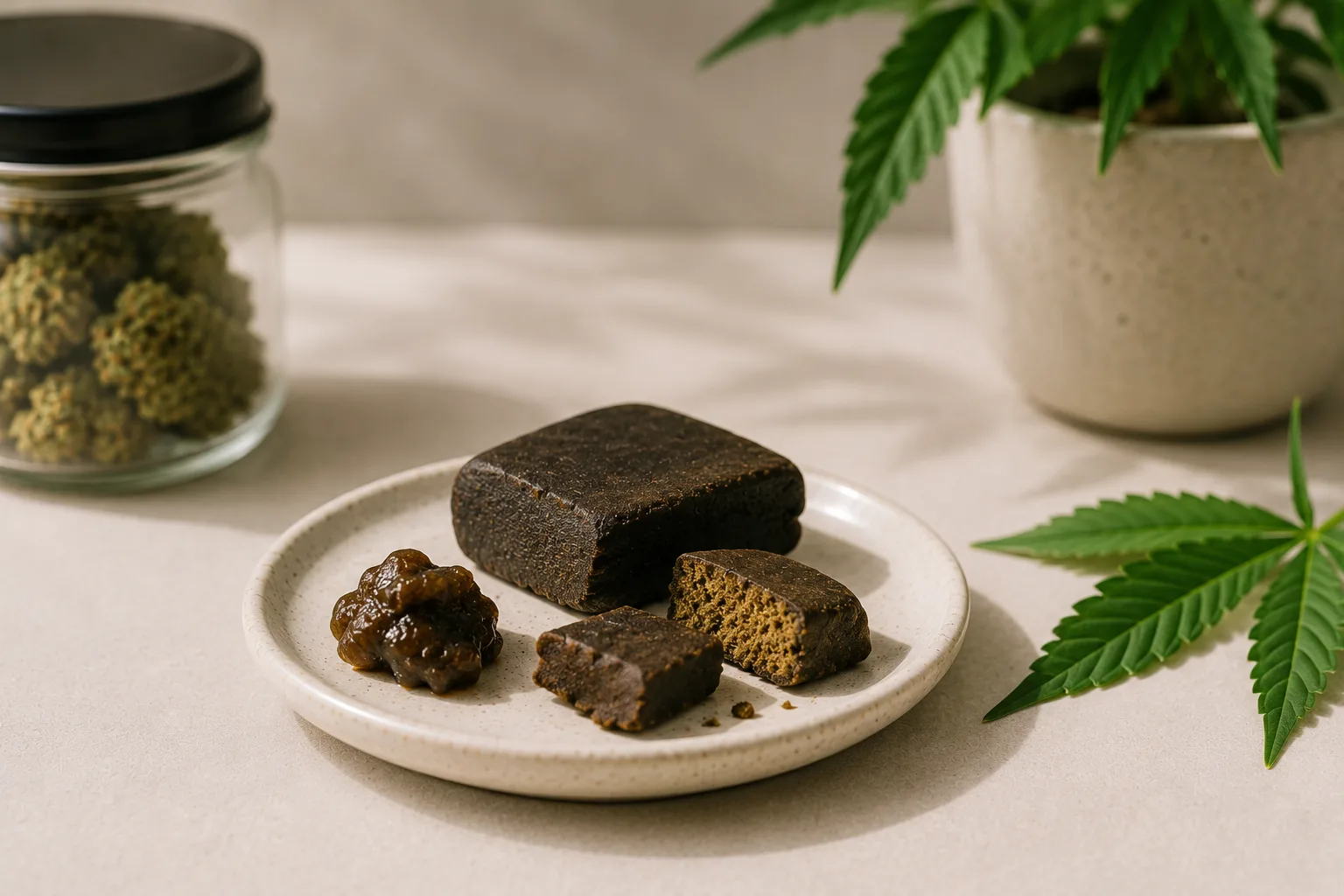
What Is Hash?
If you have spent any time exploring cannabis products, you have probably heard the word hash. It has been around…
Nearly every bad edibles story follows the same script: someone didn’t feel anything after an hour, decided it wasn’t working, took more, and then spent the next six hours wishing they hadn’t. It’s not a rare experience. A survey published in Cannabis and Cannabinoid Research found that overconsumption was the leading cause of negative edibles experiences, and the primary driver of overconsumption was impatience with the delayed onset. The fix isn’t complicated, but it requires understanding how edibles work in your body and knowing how to dose them in a way that matches your biology, not someone else’s.
The challenge is that edibles don’t behave like other cannabis formats. They have a delayed onset, a longer duration, and a more variable peak intensity than smoking or vaping. Add in individual differences in body weight, metabolism, liver enzyme activity, and tolerance, and a dose that barely registers for one person can completely overwhelm another. A one-size-fits-all approach doesn’t work here.
What does work is a structured framework: start at the lowest reasonable dose, wait the full recommended time before reassessing, and build up incrementally across multiple sessions. This guide is built around that framework.
Before getting into dosing specifics, it helps to understand why edibles feel so much stronger than smoking at equivalent milligram amounts. When you eat a cannabis edible, THC travels through your digestive tract, gets absorbed by the small intestine, and passes through the liver before entering your bloodstream. In the liver, THC is converted into 11-hydroxy-THC, a metabolite that crosses the blood-brain barrier more efficiently than standard THC and produces a more intense, longer-lasting psychoactive effect.
This is the core reason why edibles feel different than smoking, even if the milligram number looks modest. A 10mg edible can hit significantly harder than smoking what looks like an equivalent amount of flower, because you’re not getting the same compound. You’re getting a converted, more potent version.
The liver conversion also explains the delay. Your body needs time to digest the food, absorb the cannabinoids, and metabolize them before any effect reaches your brain. That process typically takes between 30 minutes and two hours, and in some people up to three hours when consumed with a heavy meal. The variation depends on your digestive speed, what else is in your stomach, and how efficiently your liver processes cannabinoids.
A full stomach versus empty stomach matters more than most people realize. Taking an edible on an empty stomach often produces a faster, sharper onset because there’s nothing competing for absorption in your digestive tract. Taking one after a large, fatty meal can delay onset significantly and blunt the peak. Neither is right or wrong, but knowing your own patterns helps you time the experience more predictably.
Oregon’s legal cannabis market sells edibles in measured doses, typically ranging from 1mg to 100mg THC per package, with individual pieces often landing at 5mg or 10mg. Having a clear dosage reference tied to tolerance and experience takes a lot of the guesswork out of knowing how to dose edibles before you ever open the package.
Cannabis Edibles Dosage Guide by Tier
| Dose Range | Experience Level | Likely Effects | Best For |
| 1–2.5 mg | All / Microdose | Subtle focus, mild mood lift | First-timers, microdosers, daytime use |
| 2.5–5 mg | Beginner | Light relaxation, gentle euphoria | Low-tolerance users, new to edibles |
| 5–10 mg | Beginner–Moderate | Clear psychoactive effects, body relaxation | Recreational use, sleep support |
| 10–20 mg | Moderate–Experienced | Strong euphoria, deeper body effects | Higher tolerance, therapeutic use |
| 20–50 mg | Experienced | Intense effects, possible anxiety at upper end | High-tolerance consumers only |
| 50 mg+ | Very Experienced | Very strong, long-lasting | Not recommended without established tolerance |
A few things worth noting about this chart. First, the dose ranges reflect THC specifically. CBD-dominant or balanced THC:CBD edibles behave differently, and CBD can moderate some of THC’s more intense effects. If you’re sensitive to THC or prone to anxiety, a 1:1 THC:CBD edible at the same milligram count will generally feel milder and more manageable than a pure THC product. Brands like Wyld, which Lucky Lion carries, offer both THC-only and balanced options across multiple dose levels.
Second, these tiers are starting points, not guarantees. Two people at the same experience level can respond very differently to the same dose based on body composition, liver enzyme variations, and current metabolic state. The chart tells you where to start. Your own experience tells you where to go from there.
The standard recommendation for a first-time edibles dose is 2.5 to 5mg of THC. That range might feel conservative if you’ve been smoking for years, but the edibles format genuinely requires a separate calibration process. Experienced flower consumers have made the mistake of assuming their smoking tolerance translates directly to edibles, taking 20 or 25mg on a first try, and having an overwhelming experience that turned them off the format entirely.
At 2.5mg, most people notice a mild mood shift or light physical relaxation. It’s subtle enough that you might wonder whether you feel anything at all, which is exactly the point. A threshold dose at 2.5mg confirms how your body processes edibles without putting you in an uncomfortable position if the effect is stronger than expected.
If 2.5mg produces no noticeable effect after a full two-hour wait, you can try 5mg in your next session, not the same day. Building your baseline across multiple sessions, rather than escalating mid-experience, is the point of the start-low approach. One customer shared her experience this way: “I was terrified of edibles after a bad experience at a party years ago. A budtender at Lucky Lion suggested I try a single 2.5mg gummy and actually wait two hours. I did, felt a gentle relaxation, and that was it. Now I know my sweet spot is 5mg. I just needed a starting point that wasn’t scary.”
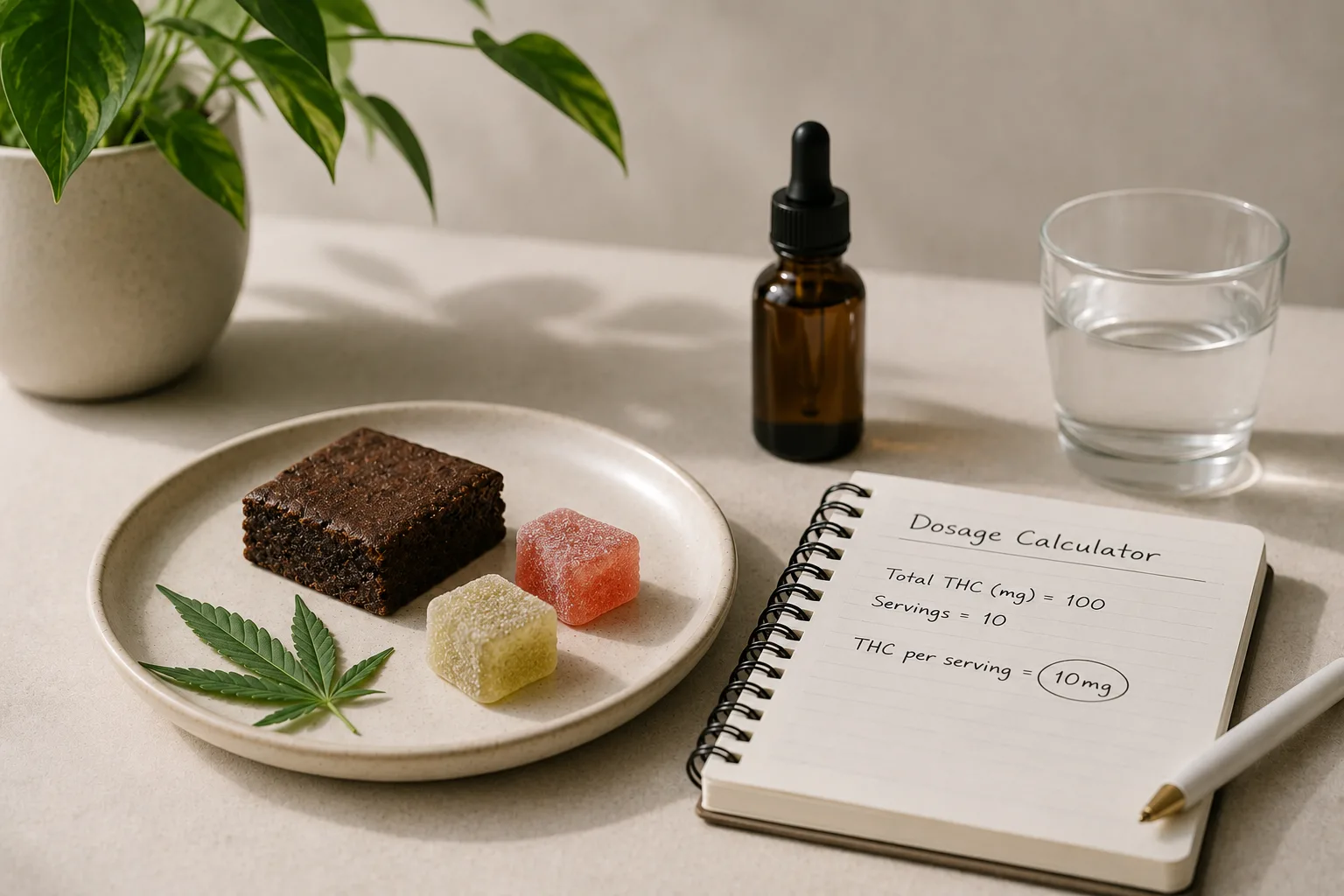
If you want help calculating a more personalized starting dose, the Lucky Lion edible calculator walks through the key variables, including body weight, tolerance, and desired intensity, to give you a more tailored number than any general chart can.
This is where most problematic edible experiences begin. The window between “I don’t feel anything” and “this is too much” can close very fast when someone redoses too early.
The standard guidance is to wait a minimum of two hours after your initial dose before considering any additional amount. For first-time consumers or anyone using a new product, waiting the full two hours is non-negotiable. Even two hours may be too soon if you ate a large meal before consuming, since digestion could still be slowing absorption.
If two hours have passed and you feel nothing, the right move is a modest top-up, 2.5mg to 5mg at most, not another full dose. The original dose may simply be delayed rather than absent. Your digestive system doesn’t operate on a strict schedule, and adding a second full dose on top of a delayed first one is how people end up taking three times what they intended.
Safe redosing follows the same principle as the initial dose: go smaller than you think you need. If your starting dose was 5mg and two hours passed with minimal effect, add 2.5mg rather than another 5mg. If your starting dose was 10mg, a 5mg addition after the full wait window is reasonable for experienced consumers.
It’s also worth considering how long you wait before redosing. Edibles effects typically last four to eight hours, sometimes longer at higher doses. Adding more while still in the active window of a previous dose means the effects will compound. Someone who takes 10mg, waits two hours, feels moderate effects, and then adds another 10mg is likely heading toward a four-to-six hour experience at a higher intensity than intended, and there’s no way to reverse it once the second dose is absorbed.
The safest redosing strategy across the board: if you feel anything at all after two hours, don’t add more. Wait until the effects have fully resolved and try a slightly higher dose next time rather than stacking doses mid-session.
Cannabis tolerance develops through repeated exposure, and it applies to edibles just as it does to smoking, though the mechanisms interact in distinct ways. Regular cannabis consumers develop a degree of tolerance to THC’s psychoactive effects, which means they typically need higher doses to achieve the same result as someone who consumes less frequently.
But tolerance to inhaled cannabis doesn’t map cleanly to edibles tolerance, particularly for people who are new to the edible format. The 11-hydroxy-THC produced during edible metabolism is a different compound than the THC reaching your system when you inhale, and your body’s response to it may differ from what you’ve calibrated through smoking or vaping. An experienced daily flower consumer who has never tried edibles should still approach them at the beginner end of the dosage chart until they’ve established how their body specifically responds to oral cannabinoid absorption.
Tolerance also resets. If you take a break from cannabis for two to four weeks, your sensitivity to THC increases noticeably. Returning to your previous edibles dose after a tolerance break can result in significantly stronger effects than you remember. This is why many regular consumers deliberately take breaks: a lower dose can achieve the same effect, which is easier on the body and more economical.
Microdosing refers to consuming cannabis at doses low enough to produce minimal to no psychoactive effect while still potentially delivering functional benefits like mild anxiety relief, focus, or mood stabilization. For edibles, microdosing typically means 1 to 2.5mg of THC per dose, sometimes taken once or twice daily.
The appeal of microdosing is the ability to integrate cannabis into a regular routine without impairment. A 1mg or 2mg edible in the morning might take the edge off anxiety or provide a subtle mood lift without affecting work performance or cognitive function. Many medical cannabis patients use this approach for consistent, low-level symptom management across the day.
Products designed for microdosing, such as 1mg or 2.5mg pieces, are increasingly common in Oregon’s legal market. Hapy Kitchen, one of the edibles brands carried at Lucky Lion, produces products in formats that support this kind of precision dosing. If you’re curious about the edibles-making side of things, the Lucky Lion guide to making edibles at home covers infusion basics and dosage math for homemade products.
Yes, and the difference is substantial for some people. When your stomach is empty, there’s nothing slowing absorption in the small intestine. Cannabinoids from the edible move through the digestive tract faster and get absorbed more completely, producing a faster onset and often a more intense peak effect.
Taking an edible with or shortly after a high-fat meal has the opposite effect. Fat slows gastric emptying, which delays when cannabinoids reach the small intestine for absorption. The onset may push out past two hours, and the peak is often flatter and more drawn out. This isn’t inherently bad; it produces a more gradual, manageable experience that some consumers prefer, but it’s why you can take the same 10mg edible twice and have noticeably different experiences depending on what you ate beforehand.
If you’re trying to establish your dose baseline, keep the food variable consistent. Try your initial doses under similar dietary conditions, either consistently on an empty stomach or consistently after a light meal, so you can accurately compare one session to the next. Changing the food context can change the experience in ways that make it hard to know whether a dose adjustment is doing what you think it is.
Figuring out how to dose edibles correctly takes a few sessions of deliberate, patient experimentation. The framework is simple: start at 2.5 to 5mg, wait the full two hours, document what you feel, and adjust by small increments across separate sessions rather than within a single one. The consumers who consistently have positive edibles experiences aren’t the ones who guessed right the first time. They’re the ones who treated the first few sessions as calibration rather than the main event.

© 2026 Lucky Lion
Disclaimer: This product is not for use by or sale to persons under the age of 21. Consult with a physician before use if you have a serious medical condition or use prescription medications. These statements have not been evaluated by the FDA. This product is not intended to diagnose, treat, cure or prevent any disease. By using this site you agree to follow the Privacy Policy and all Terms & Conditions printed on this site.

Address: 7817 NE Halsey St Portland, OR 97213
Address: 14800 SE Powell Blvd Portland, OR 97236
Address: 16148 NE Sandy Blvd Portland, OR 97230
Address: 2147 Main St, Springfield, OR 97477