
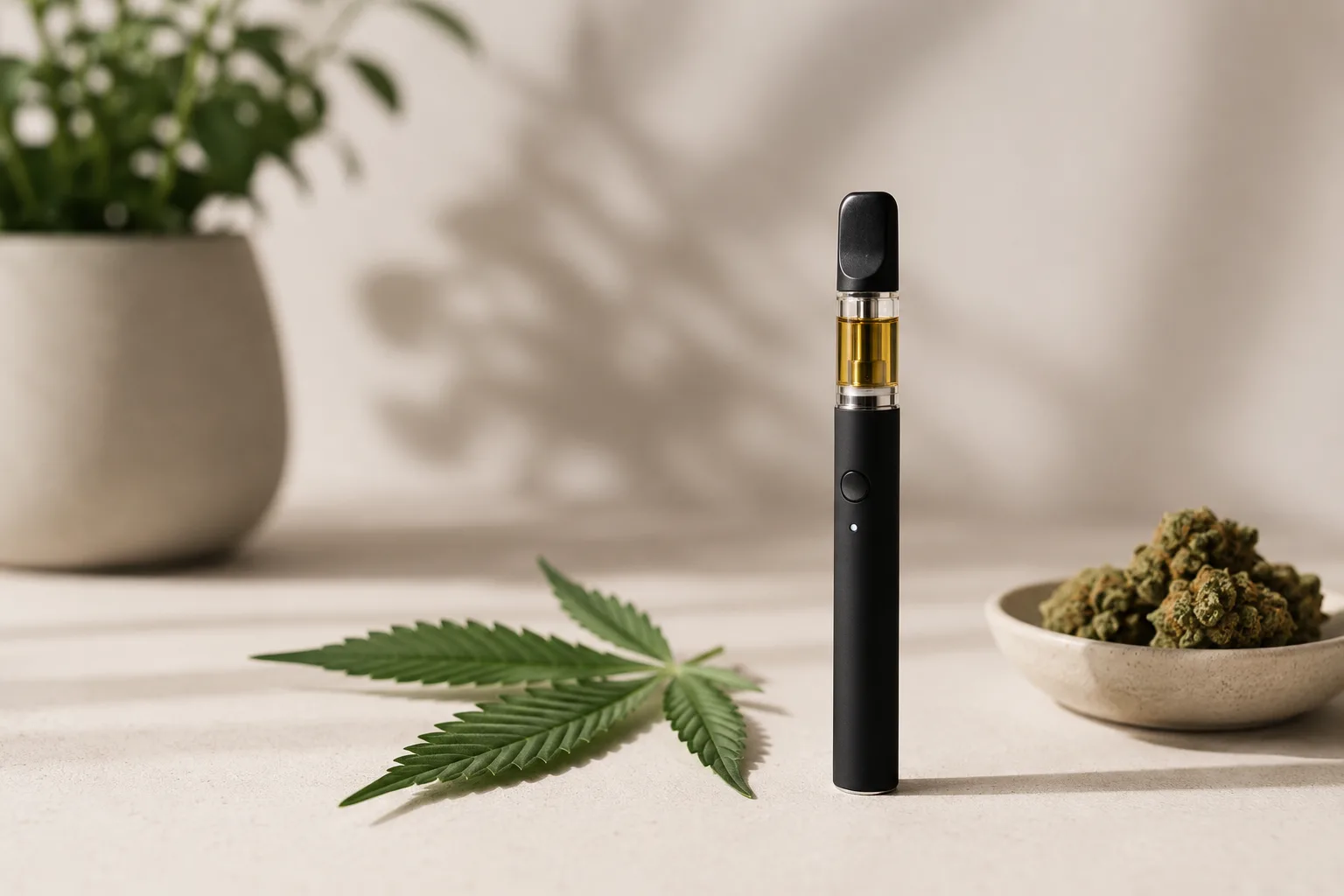
Cannabis Vape Pens Explained & How to Choose One
Vape pens are now the second most popular cannabis product category in legal markets, trailing only flower. That shift happened…
Vape pens are now the second most popular cannabis product category in legal markets, trailing only flower. That shift happened fast, and it happened because the format genuinely solves problems that other methods don’t: no smoke, minimal odor, precise dosing, and a form factor that fits in a coat pocket. But walk into a dispensary, and you’ll quickly discover that “vape pen” covers a wide range of hardware and oil types that behave very differently from each other.
Having cannabis vape pens explained properly before you buy makes a real difference. The wrong pen for the wrong oil type won’t heat correctly. A disposable that runs out before half the oil is consumed is a frustrating waste. And a high-potency distillate cartridge is a very different experience from a live resin pod, even if both technically count as “vaping.” Knowing what you’re looking a, and why it matters puts you in a much better position at the counter.
This guide covers how vape pens work mechanically, the main types available, what different oil categories mean for your experience, and how to think about choosing the right setup for your goals.
Every vape pen, regardless of type or brand, operates on the same core principle: a battery heats a coil or ceramic element, which in turn heats cannabis oil to a temperature that converts it into vapor without burning it. That distinction from combustion is the whole point. The temperature range for vaporization sits roughly between 315°F and 450°F. Burning cannabis flower happens at much higher temperatures and produces smoke, tar, and combustion byproducts. A properly functioning vape pen stays below those thresholds.
The oil inside a cartridge or disposable is a concentrated cannabis extract. It’s viscous, typically somewhere between the consistency of honey and motor oil ,depending on the extraction type, and it sits in a reservoir above or around the heating element. When you draw air through the mouthpiece (on draw-activated pens) or press a button, the battery sends current to the atomizer, which heats up and vaporizes whatever oil is in contact with it.
The vapor then travels up through the mouthpiece and into your lungs. Because it’s not smoke, the experience is typically smoother, cooler, and less irritating than a joint or pipe. The cannabinoids and terpenes in the oil absorb through the lung tissue in the same way as inhaled smoke, so onset is similarly fast, usually within two to ten minutes.
Cannabis vape pens explained at a hardware level usually start with this distinction. Button-activated pens require you to press a button while inhaling. They often allow you to set temperature or preheat the oil, which is useful for thicker concentrates like live resin or rosin that need more heat to flow properly. Draw-activated pens have no button; they sense airflow and activate automatically. These are simpler to use and more common in disposable formats, which makes them a natural starting point for first-time consumers.
One customer described the experience of switching from a button-activated cartridge battery to a draw-activated disposable this way: “I kept forgetting to hold the button while I inhaled and either got nothing or a burned taste. The draw-activated one just worked. No learning curve.” That kind of friction is worth eliminating, especially early on.
Understanding the types of cannabis vape pens is where most buying decisions get made. The major categories are 510 thread batteries with separate cartridges, all-in-one disposables, pod systems, and refillable/open-system pens. Each has a clear use case.
The 510 thread vape pen is the industry standard format and by far the most widely available. The “510” refers to the threading pattern on the battery connection, which has been standardized across most cartridge manufacturers. This means a 510 thread battery from one brand will accept a 510 cartridge from nearly any other brand. That interoperability is a significant advantage if you like to try different oils and brands without buying new hardware each time.
A 510 setup consists of two parts: the battery (the reusable component you keep) and the cartridge (the oil-filled tank you replace when it’s empty). Batteries range from simple, single-voltage pens to variable-voltage devices with preheat functions and temperature control. Entry-level 510 batteries typically cost between $15 and $30 and can last for dozens of cartridge cycles before needing replacement. Cartridges from licensed Oregon dispensaries generally range from $25 to $60, depending on oil type and brand.
The vape pen cartridge guide principle here is simple: invest once in a quality battery, then swap cartridges as you explore different strains, extract types, and brands. Top-selling 510 cartridge brands at Lucky Lion include Buddies, Mule, Rogue River Family Farms, Select, and Sensible, all tested and from licensed Oregon producers.
A disposable vape pen combines battery and cartridge into a single sealed unit. When the oil runs out, or the battery dies (ideall,y both happen around the same time, though this doesn’t always work out perfectly), you dispose of the whole thing. There’s nothing to charge separately, no threading, no switching cartridges. You open the package, you inhale, you’re done.
The disposable vape pen vs cartridge question comes down to convenience vs economy. Disposables cost more per milligram of oil than buying a cartridge separately, but they eliminate all setup friction. For occasional consumers, travelers, or anyone who just wants to try vaping without committing to hardware, disposables are a reasonable entry point. For regular consumers, the per-unit cost adds up, and a 510 setup becomes more economical over time.
One thing to watch with disposables: some lower-quality units die before the oil is fully consumed, leaving you with product you can’t access. Brands matter here. Licensed dispensaries carry tested products that meet quality standards, the illicit market doesn’t.
Pod systems use a proprietary pod rather than a standard cartridge, and the device and pods are typically sold by the same brand. Select is one example of a brand that sells both the device and compatible pods. The advantage of a pod system is usually a smoother, more consistent draw and a tighter integration between hardware and oil. The disadvantage is that you’re locked into that brand’s pod ecosystem, which limits your variety unless the brand has a wide product range.
Quick Comparison: Cannabis Vape Pen Types
| Type | Best For | Reusable? | Typical Cost |
| 510 Thread Battery + Cart | Experienced users, variety seekers | Yes (battery) | $15–$30 battery / $25–$60 cart |
| Disposable Vape Pen | First-timers, travel, convenience | No | $20–$50 |
| Pod System | Smooth draw, brand loyalty | Yes (device) | $30–$60 device |
| All-in-One Pen | Simplicity, low commitment | No | $25–$55 |
The hardware is only half the story. The oil inside the cartridge or disposable shapes the experience at least as much as the device itself, and this is where cannabis vape pens explained content often falls short. There are several distinct oil types, and they’re not interchangeable in terms of effect, flavor, or even viscosity.
Distillate is the most common cannabis oil vape pen format. It’s a highly refined extract, often 80 to 90 percent THC or CBD, with most other plant compounds removed. Terpenes are usually added back in after processing, either cannabis-derived or botanical. The result is potent, consistent, and shelf-stable. Distillate is what most entry-level cartridges contain, and it works well with a wide range of battery voltage settings.
Live resin is extracted from freshly frozen cannabis rather than dried and cured flower. Because the plant material never dries out, more of the original terpene profile is preserved. The resulting oil is more aromatic, more flavorful, and often described as producing a more complex, nuanced effect. Live resin cartridges are typically more expensive than distillate and tend to be more viscous, which means they benefit from a preheat function or a slightly higher voltage setting.
Live rosin is solventless, meaning it’s extracted using only heat and pressure rather than chemical solvents. It’s the premium tier of the vape category and commands a higher price to match. For consumers who prioritize a clean, full-spectrum experience and are willing to pay for it, live rosin is the pinnacle of what a cannabis oil vape pen can deliver. It’s also the most sensitive to heat, so low-temperature settings are important.
CO2 oil sits between distillate and live resin in terms of processing. It uses carbon dioxide as the extraction solvent, which leaves fewer residuals than some chemical methods and often preserves more of the original plant’s character than distillate processing does.
The best cannabis vape pen for you depends on how often you consume, what kind of experience you’re after, and how much you want to spend upfront versus per session. Those three variables narrow the field considerably.
First-time buyers and occasional consumers are usually best served by a draw-activated disposable. You’re not committing to hardware, the learning curve is minimal, and you can try a strain profile or oil type before deciding whether you want to invest in a reusable system. A half-gram disposable from a brand like Buddies or Mule is a low-risk way to establish whether vaping suits you before spending more.
Regular consumers who vape multiple times per week will likely find a 510 thread battery more economical and more versatile within a month or two. Pair it with a quality variable-voltage battery that has a preheat function, and you can run everything from distillate cartridges to live resin without issues. A 510 setup at this frequency typically pays for itself after two or three cartridge cycles compared to buying disposables.
Flavor-focused consumers who want the most terpene-forward experience should look at live resin or live rosin options in either cartridge or pod format. Budget more per cartridge and dial down your battery voltage, since these oils vaporize better at lower temperatures. Pushing live resin through a high-voltage setting will burn the terpenes and mute exactly what you paid extra to taste.
If discretion is a major factor, all vape formats produce significantly less odor than flower. Disposables are the most discreet in terms of profile (no separate battery to manage), but any vape pen produces far less lingering smell than combustion.
If you’re in the Portland area, the budtenders atLucky Lion are well-versed in matching hardware to oil types and can help you identify the right starting point in person. You can also check current vape inventory acrossall Lucky Lion locations before you visit.
A standard cartridge holds either 0.5 grams or 1 gram of oil. How long it lasts depends almost entirely on how often and how deeply you inhale. A typical puff from a vape pen delivers roughly 3 to 5 milligrams of oil. A 500mg (0.5g) cartridge, if you’re averaging four to five puffs per session, might last 25 to 40 sessions. A 1g cartridge roughly doubles that.
Heat settings affect longevity, too. Higher voltage settings vaporize more oil per puff, which means the cartridge depletes faster. Lower settings are more efficient and often produce better flavor, since you’re not overheating the oil. If you’ve been running a cartridge on the highest setting and it seems to empty unusually fast, try dropping the voltage one level.
Storage matters more than most people expect. Keeping a cartridge in a hot car or in direct sunlight degrades the oil and can thin it to the point where it leaks around the seal. Room temperature, upright storage in a dark location, extends cartridge life significantly. If you’re not using a cartridge for a few days, store it upright to keep the oil seated properly against the heating element.
Safety in the vape pen category comes down almost entirely to product sourcing. The 2019 EVALI outbreak, which caused serious lung injuries across multiple states, was traced primarily to vitamin E acetate, an additive used to cut THC oil in unregulated, illicit market products. Legal, licensed dispensaries sell products that undergo mandatory third-party testing for pesticides, residual solvents, and additives. That testing is the reason licensed products are materially safer than unregulated alternatives.
Within the legal market, hardware quality is the next variable. Cartridges with heavy metal components, particularly lead in the coil or solder points, can introduce contaminants into the vapor. Reputable brands use ceramic or food-grade coil materials. Checking whether a brand publishes its hardware specifications or third-party test results is a reasonable way to vet unfamiliar products.
Compared to combustion, vaping eliminates the byproducts of burning organic material, carbon monoxide, tar, and particulate matter, which is a meaningful respiratory benefit for regular consumers. It’s not without any inhalation risk, but the risk profile is different and generally considered lower for licensed, tested products used with quality hardware.
Technically, some cartridges can be refilled. But in practice, this isn’t something most consumers should attempt, and it comes with real downsides. Most 510 cartridges are designed as single-use units. The heating element degrades with each fill cycle, and oil from one cartridge isn’t always compatible in viscosity with what a specific atomizer is designed to handle.
More practicall, in Oregon’s legal market, cannabis oil is sold in sealed, tested cartridges. Refilling a cartridge yourself means using oil that wasn’t tested in that container, which bypasses the safety framework the legal market provides. The better path, if you’re cost-conscious, is to shift to a 510 setup where you’re buying fresh cartridges at a lower per-milligram cost than disposables rather than trying to squeeze extra life out of a spent one.
The most common regret among new vape consumers is buying the wrong format first and having a subpar experience that puts them off the category. Getting the basic framework right before you walk into a dispensary, knowing the difference between a 510 thread vape pen and a disposable, understanding what oil type you’re buying, and having realistic expectations about cartridge life, puts you in a position to actually enjoy what you’re trying.

© 2026 Lucky Lion
Disclaimer: This product is not for use by or sale to persons under the age of 21. Consult with a physician before use if you have a serious medical condition or use prescription medications. These statements have not been evaluated by the FDA. This product is not intended to diagnose, treat, cure or prevent any disease. By using this site you agree to follow the Privacy Policy and all Terms & Conditions printed on this site.

Address: 7817 NE Halsey St Portland, OR 97213
Address: 14800 SE Powell Blvd Portland, OR 97236
Address: 16148 NE Sandy Blvd Portland, OR 97230
Address: 2147 Main St, Springfield, OR 97477