
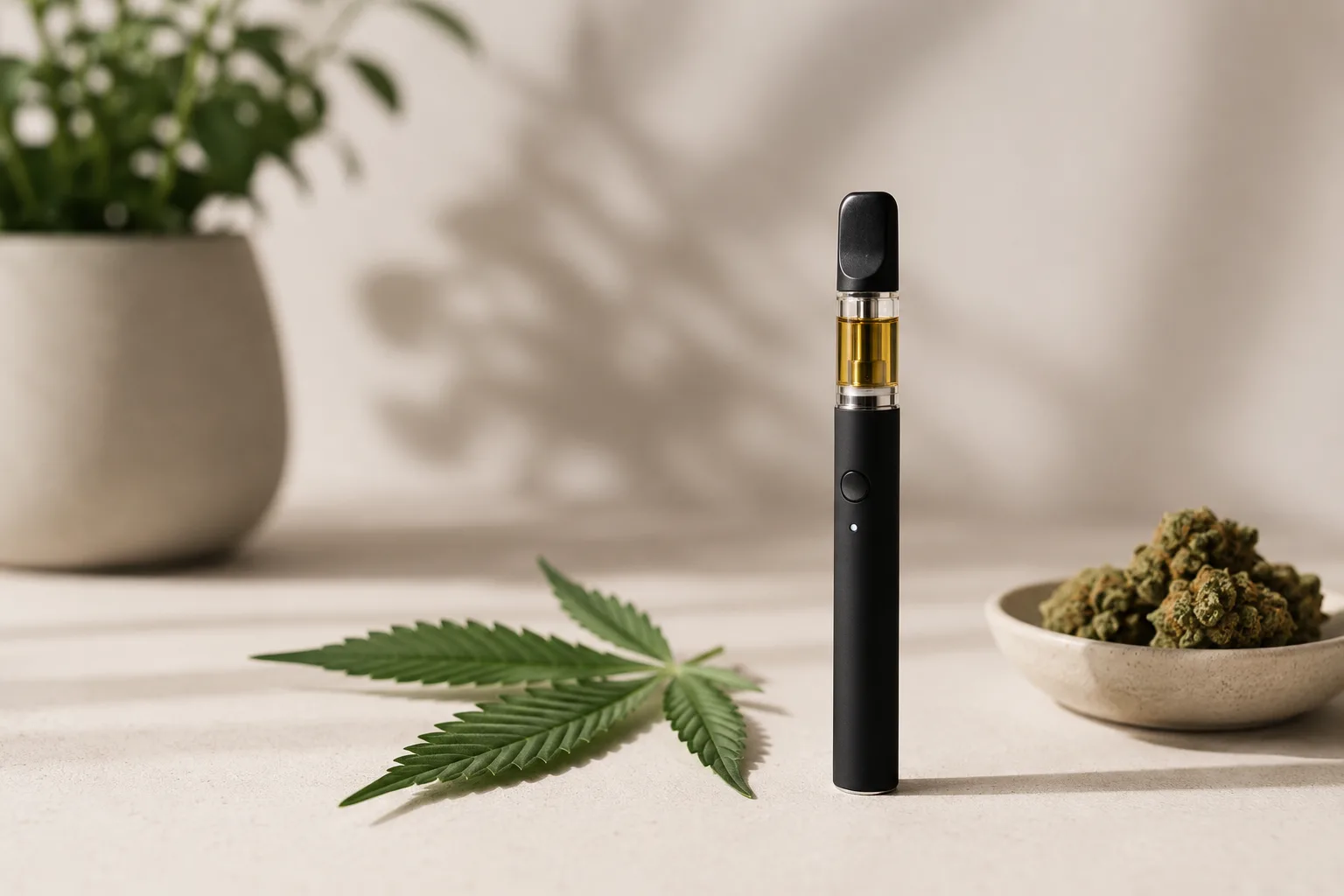
Cannabis Vape Pens Explained & How to Choose One
Vape pens are now the second most popular cannabis product category in legal markets, trailing only flower. That shift happened…
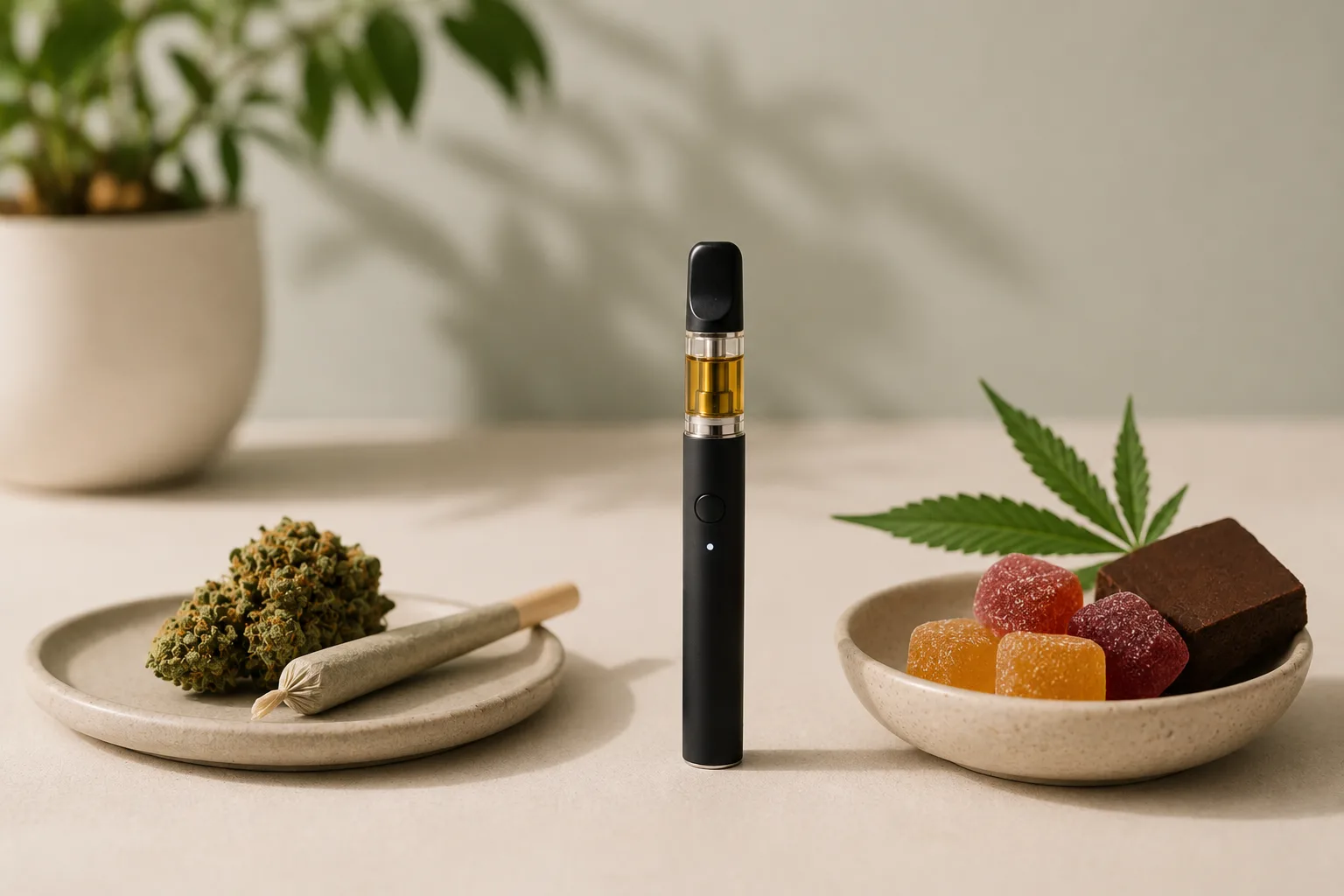
More than half of cannabis consumers in the U.S. have tried at least two different consumption methods, yet most people stick with whatever they started with. That habit might be costing them. The difference between smoking vs vaping vs edibles isn’t just a matter of preference; it shapes how fast you feel effects, how long they last, how intense the experience gets, and what’s happening inside your body the whole time.
If you’ve ever wondered why your friend’s edible hit them like a freight train while yours barely registered, or why vaping feels cleaner but somehow different than a joint, those outcomes come down to biology and chemistry, not luck. Understanding the mechanics behind each method makes it much easier to choose the one that actually fits your lifestyle.
Before diving into the specifics of smoking vs vaping vs edibles, it helps to understand one foundational concept: the route of absorption. Cannabis enters your bloodstream in fundamentally different ways depending on how you consume it, and that’s the root cause of all the variation you’ll notice.
When you inhale, whether through a joint or a vaporizer, THC travels through your lungs directly into your bloodstream. The lungs are lined with millions of tiny air sacs called alveoli, and they’re exceptionally efficient at passing molecules into the blood. That’s why the onset is fast. Within two to ten minutes, most people feel something.
Edibles take a completely different path. THC passes through your digestive tract, gets metabolized by your liver, and is converted into a compound called 11-hydroxy-THC. That compound crosses the blood-brain barrier more easily than standard THC, which explains a lot. It’s more potent, longer-lasting, and harder to predict. Research published in the National Library of Medicine confirms that edible cannabis produces effects with a distinct pharmacokinetic profile compared to inhaled cannabis, and those differences have real implications for dosing.
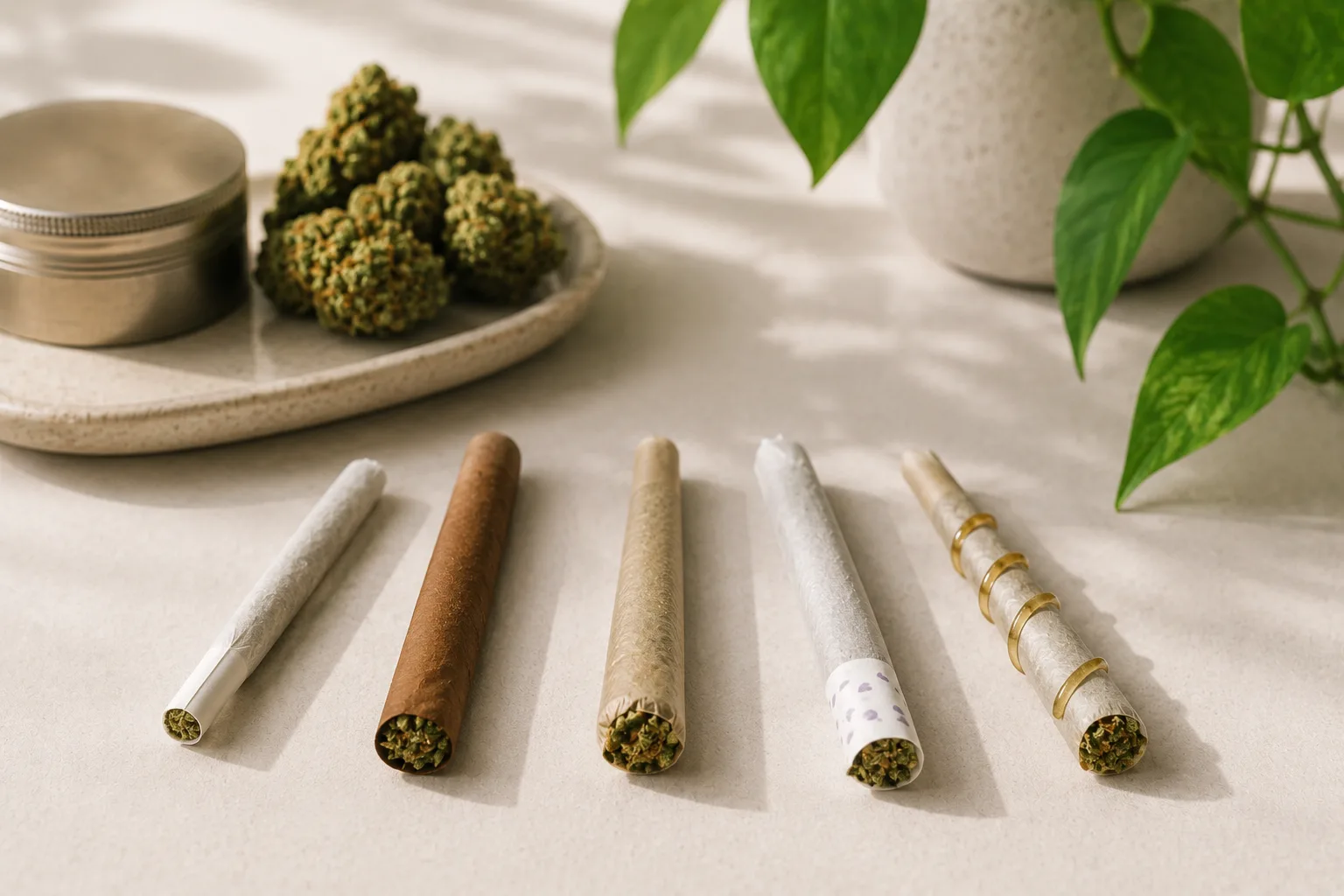
Smoking is the consumption method most people encounter first. You’re burning cannabis flower, inhaling smoke, and getting a fast, predictable onset. The experience tends to feel familiar and socially ritualistic for many users. Joint, pipe, bong, blunt, the delivery mechanism varies, but the combustion process is largely the same.
The main advantage of smoking is immediacy. You feel effects almost instantly, and you can stop at any point to gauge where you are. That makes it one of the better methods for beginners trying to calibrate their tolerance. A first-time consumer who takes two puffs and waits five minutes has a much clearer picture of what’s happening than one who eats a gummy and spends two hours wondering.
The tradeoff is the smoke itself. Combustion produces byproducts beyond cannabinoids, including carbon monoxide, tar, and other irritants. Long-term heavy smoking is associated with respiratory irritation, chronic bronchitis symptoms, and other lung concerns. That’s not a reason to avoid cannabis; it’s a reason to consider how you’re consuming it.
Vaping heats cannabis, either flower or concentrated oil, to a temperature that releases cannabinoids and terpenes as vapor without triggering full combustion. The result is an inhaled experience with a similar onset to smoking, but with a meaningfully different chemical profile.
When comparing vaping weed vs smoking from a respiratory standpoint, vaping generally comes out ahead. Because there’s no combustion, you’re not inhaling the same quantity of tar and carbon monoxide. A frequently cited study, Decreased respiratory symptoms in cannabis users who vaporize, found that switching from smoking to vaping cannabis was associated with improved respiratory symptoms in regular users.
That said, vaping isn’t entirely risk-free. Low-quality cartridges, improper hardware, and unregulated additives have all been linked to lung issues, particularly in the illicit market. Buying from a licensed dispensary with tested products matters enormously.
Vaping also tends to taste cleaner. Terpenes, the aromatic compounds responsible for the flavor and nuanced effects of different strains, survive better at lower temperatures. A well-made vape cartridge can deliver a more pronounced and accurate strain profile than combustion, where high heat destroys many of those compounds almost immediately.
This is one of the most searched questions around cannabis consumption methods comparison, and it doesn’t have a clean answer because it depends on the THC concentration of the cartridge, the temperature setting, and individual tolerance.
A standard 1g cartridge typically delivers somewhere between 150 and 300 puffs. A single joint usually contains around 0.5g of flower. But cartridges are almost always significantly more concentrated than flower, sometimes 70 to 90 percent THC compared to 15 to 30 percent in most flower. So a single vape puff often delivers more THC than a full drag from a joint. Start low and gauge slowly.
The edibles vs smoking effects debate is really a conversation about two separate physiological experiences. They’re both cannabis, but your body processes them in ways that feel almost incomparable in practice.
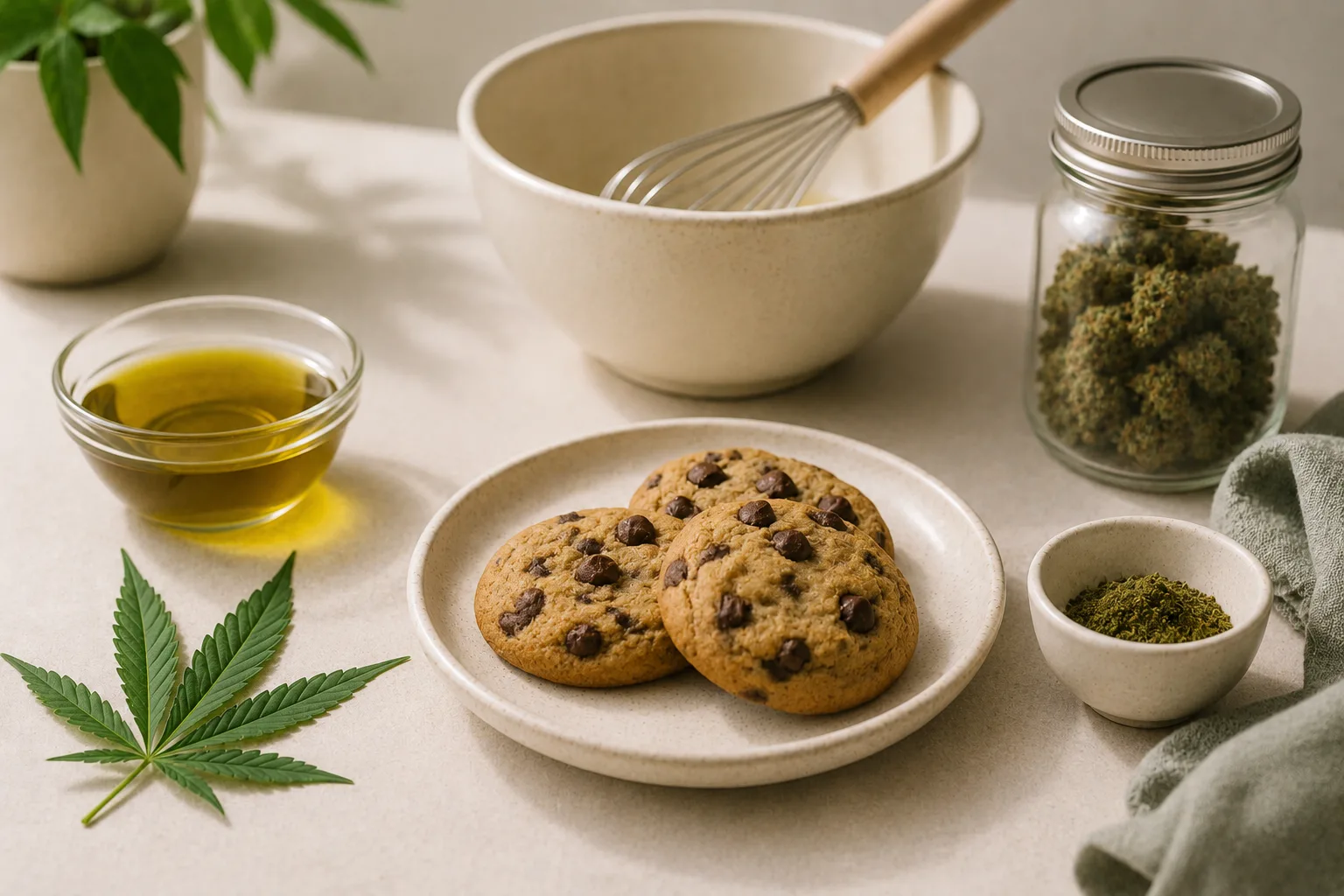
When you eat an edible, the wait is the defining feature. Most people report feeling effects somewhere between 30 minutes and two hours after consumption, and that wide range is frustrating when you’re not sure what to expect. The delay comes from digestion. Your stomach has to break down the food, your small intestine has to absorb the cannabinoids, and your liver has to metabolize them. Only after all of that does THC reach your brain. For people who’ve never eaten an edible before, the most common mistake is eating more because “it’s not working.” Then everything hits at once.
Once the effects do arrive, they’re typically stronger and longer-lasting than inhaled cannabis. Edibles can produce effects that last four to eight hours, and for high doses, even longer. The 11-hydroxy-THC conversion from the liver is more psychoactive per milligram than the THC you’d inhale. This is why edibles do hit harder than smoking for most people, even at equivalent milligram doses. Someone used to smoking a gram of 20 percent flower doesn’t necessarily have the same tolerance for a 100mg edible.
If you need a simple framework, smoking and vaping both produce onset within two to ten minutes, with effects peaking around 30 to 60 minutes and tapering off after one to three hours. Edibles take 30 minutes to two hours to kick in, peak effects arrive around two to four hours in, and the overall experience can last four to eight hours or longer, depending on dose and metabolism. That difference in how long do edibles take vs smoking is the single most important thing to understand before switching methods.
Food in your stomach affects edibles, too. Taking an edible on a full stomach can significantly slow and blunt the onset. Taking one on an empty stomach often accelerates and intensifies effects. Neither is wrong, but knowing the pattern for your own body takes some experimentation.
Quick Comparison: Smoking vs Vaping vs Edibles
| Method | Onset | Duration | Intensity Control | Discretion |
| Smoking | 2–10 min | 1–3 hours | High | Low |
| Vaping | 2–10 min | 1–3 hours | High | Medium |
| Edibles | 30–120 min | 4–8 hours | Lower | High |
There’s no universal best way to consume cannabis because the right answer depends on what you’re trying to accomplish. But there are some practical patterns worth knowing.
If you’re a new consumer, smoking or vaping gives you the most control. You can take one or two puffs, wait five to ten minutes, assess how you feel, and continue or stop. That titration ability is valuable when you’re still learning your relationship with THC. Starting with edibles is riskier because you can’t undo a dose once it’s in your system, and the delay makes it easy to accidentally overconsume.
If respiratory health is a concern, edibles or vaping are the obvious alternatives to combustion. Edibles bypass the lungs entirely, which makes them appealing for anyone with asthma, sensitivity to smoke, or simply a preference for not inhaling anything. The tradeoff is precision, which you’ll need to build slowly.
If discretion matters, edibles win. They’re odorless, portable, and look like any other food product. Vaping is a middle ground, producing much less smell than smoking. Smoking is the most obvious and aromatic.
For experienced consumers looking for the longest-lasting effect, perhaps managing chronic discomfort or wanting sustained relief through a long day, edibles often make the most sense. A well-dosed edible in the morning can provide consistent background effects for hours without needing to step away and consume again.
You can explore our full range of edibles, vapes, and flower in-store or browse what’s available on all Lucky Lion menus.
The research on vaping weed vs smoking health outcomes generally suggests vaping produces fewer harmful combustion byproducts. Studies have found that people who switched from smoking to vaping cannabis reported fewer respiratory symptoms over time. The key distinction is combustion: burning organic material produces carbon monoxide and particulate matter regardless of what’s being burned, and the lungs don’t distinguish.
But the vaping category isn’t monolithic. High-quality flower vaporizers operating at the right temperature ranges and premium oil cartridges from licensed producers behave very differently from low-cost, unregulated alternatives. The vitamin E acetate issue that triggered a wave of lung injuries in 2019 was primarily traced to illicit market cartridges cut with that additive, not legal, tested products. Buying from a licensed dispensary with third-party lab results isn’t just about potency; it’s genuinely a safety issue.
Are edibles better for lungs than smoking? Unambiguously yes, because there’s no inhalation involved. If your primary concern is respiratory impact, edibles remove that variable entirely.
Effectiveness is subjective, but potency isn’t. Milligram for milligram, edibles tend to produce a more intense psychoactive experience because of the 11-hydroxy-THC conversion in the liver. So in terms of raw strength, edibles often win.
But smoking is more efficient at delivering THC to your system in the sense that you lose much less of it to digestion and first-pass metabolism. When you inhale, a large percentage of the THC in the vapor or smoke reaches your bloodstream relatively intact. With edibles, a significant portion can be broken down during digestion before it ever reaches your brain, though what does get through is converted to a more potent form.
The real question is effectiveness for what purpose. For immediate relief, smoking or vaping. For sustained, deep effects, edibles. For most people trying to manage something chronic, edibles at a consistent, calibrated dose tend to be more reliable over time because the experience is longer and more predictable once you’ve dialed in your dose.
The edibles vs inhaling cannabis experience feels different, not just because of the 11-hydroxy-THC conversion, but also because of timing and intensity patterns. When you smoke or vape, effects build and fade in a relatively smooth arc over one to three hours. With edibles, the onset is delayed, but the peak can be sharper, and the comedown is longer and more gradual.
Some consumers describe the edible experience as more “body” and less “head” than smoking, though this varies considerably by strain, individual endocannabinoid system, and dose. Others find that edibles produce more anxiety at higher doses precisely because of the intensity and duration. People who are prone to anxiety from cannabis are often better served by low-dose vaping or smoking, where they can stop easily and wait for effects to stabilize.
The social dimension is different, too. Smoking and vaping are active rituals, which naturally pace your consumption. Edibles remove that pacing mechanism. Without the act of lighting up or taking a puff to anchor the experience, it’s easy to underestimate how much you’ve taken and how soon it’ll arrive.
If you’re in the Portland area or near Springfield and want personalized guidance, the team atLucky Lion dispensary locations can walk you through the products that best match your goals, whether you’re brand new to cannabis or switching methods after years of use.
Switching from smoking to vaping or edibles, or from edibles to inhalation, usually requires a recalibration period. Your tolerance was built on a specific method, and a different one may interact with your endocannabinoid system differently, even if the chemical compound is the same.
People who transition from smoking to edibles often assume their existing tolerance will carry over. It doesn’t, reliably. The two-hour onset window, combined with the liver conversion process, means even experienced smokers should start at 5 to 10mg for edibles and wait the full two hours before assessing. The reverse is also true: someone whose only experience is with edibles may find that inhalation produces a faster, more manageable effect at a lower effective dose.
There’s no single consumption method that’s correct for every person or every situation. The cannabis consumption methods comparison that matters most is the one you make based on your own goals, tolerance, health context, and lifestyle, not what anyone else swears by.

© 2026 Lucky Lion
Disclaimer: This product is not for use by or sale to persons under the age of 21. Consult with a physician before use if you have a serious medical condition or use prescription medications. These statements have not been evaluated by the FDA. This product is not intended to diagnose, treat, cure or prevent any disease. By using this site you agree to follow the Privacy Policy and all Terms & Conditions printed on this site.

Address: 7817 NE Halsey St Portland, OR 97213
Address: 14800 SE Powell Blvd Portland, OR 97236
Address: 16148 NE Sandy Blvd Portland, OR 97230
Address: 2147 Main St, Springfield, OR 97477