
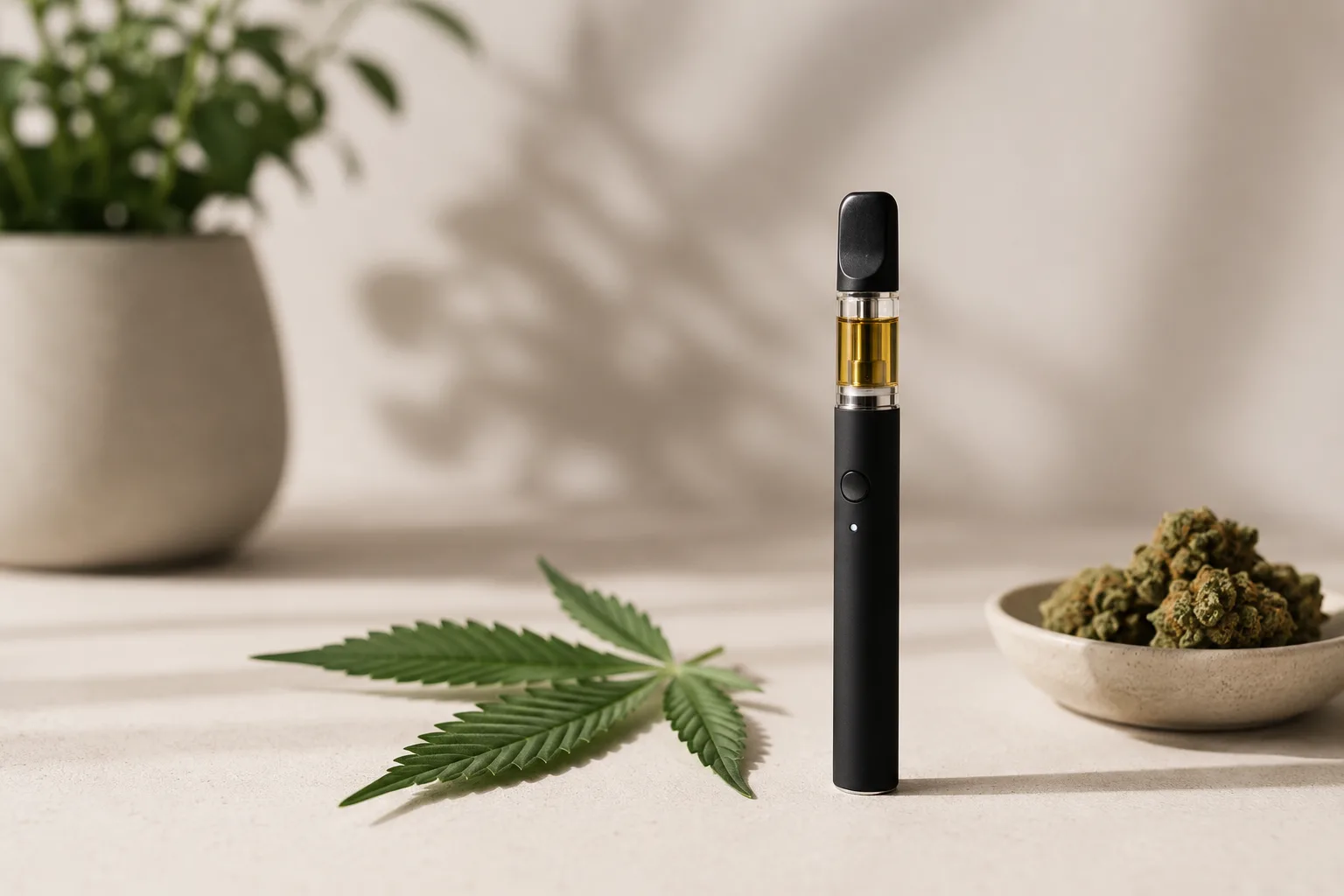
Cannabis Vape Pens Explained & How to Choose One
Vape pens are now the second most popular cannabis product category in legal markets, trailing only flower. That shift happened…
The indica/sativa label on a package has never told the full story. Two plants both labeled “indica” can produce completely different experiences: one sedating, one surprisingly social. The reason isn’t the classification; it’s the terpene profile, the cannabinoid ratios, and the specific genetics of that cultivar. Shopping by effect rather than category is a smarter approach, and it’s how experienced consumers have done it for years.
That’s the framework behind this list. These seven cannabis strains for relaxation vs energy are organized by what they actually do, not just what they’re labeled. Three lean toward calm and rest. Four lean toward lift and clarity. Each one has a different profile worth understanding, because terpenes and cannabinoids are the real engine behind why different strains feel so different from each other.
Before getting into specific strains, it helps to understand why indica and sativa labels have become unreliable predictors of effect. Research published in PLOS ONE found that commercial cannabis labeled indica or sativa showed no consistent genetic differentiation between the two categories. In other words, the label often doesn’t correspond to a meaningful biological distinction.
What reliably predicts an effect is a synergistic phenomenon known as the entourage effect. This is the chemical interplay between a strain’s major cannabinoids (like THC and CBD), minor cannabinoids (like CBG, CBN, and THCV), and its terpene profile. While cannabinoids drive the high, terpenes and trace compounds act as the steering wheel, guiding the experience toward relaxation or energy.
For instance, a strain’s cannabinoid ratios set the baseline foundation. A high-THC strain with zero CBD will feel intensely stimulating. Introduce a balanced ratio of CBD or minor cannabinoids like CBG (associated with focus) or CBN (associated with sleep), and the trajectory of the high changes completely.
Terpenes then fine-tune this chemical foundation:
These aren’t folk claims; pharmacological research backs them, showing how these diverse plant compounds interact with the brain’s receptors and our individual endocannabinoid systems.
So when you’re choosing between cannabis strains for relaxation vs energy, looking at the entire chemical breakdown, the cannabinoid percentages combined with the dominant terpenes, is infinitely more useful than relying on an arbitrary indica or sativa classification. Keep that complete chemical package in mind as you read through the strains below.
For a deeper look at how the indica/sativa/hybrid classification system works and where it falls short, the team at Lucky Lion has a full breakdown here.
Granddaddy Purple, often called GDP, is commonly described as a cross of Purple Urkle and Big Bud. It is widely recognized for its purple coloration, sweet grape-and-berry aroma, and reputation for a heavier, evening-oriented experience.
Many products sold as GDP are reported to contain myrcene, beta-caryophyllene, and pinene, although their order and concentration can vary by batch. Myrcene is often associated with an earthy aroma and a more body-oriented, relaxing subjective experience. Beta-caryophyllene is notable because it can interact with CB2 receptors in preclinical research, but that does not mean a GDP product has proven anti-inflammatory or pain-treating effects. Pinene contributes pine-like aroma and is sometimes associated by consumers with a clearer-feeling experience, though it does not reliably prevent THC-related impairment.
GDP flower is often sold in a moderate-to-high THC range, commonly around 17–23%, although actual potency can fall below or above that range. Consumers often choose it for late-day relaxation or when they prefer a more pronounced body effect. Because higher-THC products can feel intense, especially for new consumers, start with a small amount and wait to assess the effects before using more.
Often chosen for: Evening relaxation, winding down, and a heavier body-oriented experience.
Terpenes to check on the COA: Myrcene, beta-caryophyllene, pinene.
Blue Dream is commonly described as a Blueberry × Haze cross. It is a widely available hybrid that is often associated with sweet berry aromas and a middle-ground experience: relaxed for some consumers, but less physically heavy than many products marketed as indica-dominant.
The terpene profile of products sold as Blue Dream can vary substantially. Myrcene, beta-caryophyllene, pinene, limonene, and sometimes terpinolene may appear prominently, depending on the producer and batch. Rather than relying on the name alone, review the COA to see which terpenes are actually present in the product you are considering.
Blue Dream is often marketed with THC levels in roughly the 17–24% range, though the individual package result matters more than a strain-wide estimate. Some consumers report feeling calm, sociable, or creatively engaged; others can still experience anxiety or impairment, particularly at higher doses. “Hybrid” and “balanced” do not guarantee a mild effect.
Often chosen for: Social settings, low-key daytime use, and consumers seeking a less-heavy experience.
Terpenes to check on the COA: Myrcene, beta-caryophyllene, pinene, limonene, or terpinolene.
Bubba Kush is a classic cultivar commonly marketed as indica-dominant or heavily relaxing. It is often associated with earthy, coffee-like, cocoa, and spicy aromas, as well as a slow-paced, late-evening reputation.
Many batches sold as Bubba Kush feature myrcene, limonene, and beta-caryophyllene, but the dominant-terpene order is not fixed. Myrcene is often linked to earthy aroma and consumer reports of a fuller-body effect. Limonene produces citrus-like aroma and may influence subjective mood effects, but it should not be presented as a treatment for anxiety or depression. Beta-caryophyllene can interact with CB2 receptors in preclinical research, but that does not establish that a Bubba Kush product treats inflammation, muscle tension, or chronic pain.
Bubba Kush is commonly sold around 17–22% THC, with meaningful variation between products. It may suit consumers comfortable with a stronger or more sedating product, but a strain label cannot guarantee sleep effects. If using cannabis in the evening, begin with a low dose, particularly if you are inexperienced or sensitive to THC.
Often chosen for: Late-evening use, quiet settings, and consumers seeking a heavier, more tranquil experience.
Terpenes to check on the COA: Myrcene, limonene, beta-caryophyllene.
An “energizing” cannabis experience is subjective. A product may feel motivating or upbeat while still impairing reaction time, divided attention, judgment, and coordination. Do not drive, operate machinery, cycle in traffic, or perform safety-sensitive work after using THC, even if you feel clear-headed or productive.
Green Crack is commonly marketed as a sativa-leaning cultivar and is often associated with citrus, mango, and tropical aromas. Its market reputation is more active and mentally stimulating than heavy or sedating.
Products sold as Green Crack may contain myrcene, beta-caryophyllene, ocimene, pinene, or other terpenes in varying proportions. Ocimene contributes a sweet, herbal, or floral aroma in some cannabis products, but it should not be described as antiviral or as a proven source of energy. Clinical evidence is not strong enough to predict an energizing effect from ocimene or any single terpene on its own.
Green Crack is commonly sold in an approximately 16–24% THC range. Some consumers describe it as upbeat, engaging, or suitable for daytime leisure activities. Others may find higher-THC, stimulating-feeling products uncomfortable or anxiety-provoking, especially at larger doses.
Often chosen for: Daytime leisure, creative hobbies, and consumers looking for a more active-feeling profile.
Terpenes to check on the COA: Myrcene, beta-caryophyllene, ocimene, pinene.
Durban Poison is commonly described as a South African-origin cultivar and is frequently marketed as a landrace or landrace-influenced sativa. Commercial versions may differ from one producer to another, so “true landrace” is stronger language than the available market evidence usually supports.
It is known for herbal, sweet, spicy, and sometimes pine-like aromas. Terpinolene is often associated with products sold as Durban Poison, but not every tested sample is terpinolene-dominant; myrcene, caryophyllene, pinene, and other terpenes can also be significant. Published chemical testing of products labeled Durban Poison has found different terpene rankings across samples, illustrating why a COA is more reliable than a strain name.
Durban Poison is commonly sold around 17–20% THC, though products can vary. Some consumers report an alert, euphoric, or socially engaged experience. Others may experience restlessness, anxiety, rapid heart rate, or paranoia, particularly when THC content or dose is high. It should not be described as inherently suitable for people prone to cannabis-related anxiety.
Often chosen for: Daytime social plans, outdoor leisure, and consumers who prefer a less-heavy profile.
Terpenes to check on the COA: Terpinolene, myrcene, beta-caryophyllene, pinene, ocimene.
Jack Herer is named for cannabis activist and author Jack Herer. It is commonly marketed as a sativa-dominant hybrid and is known for piney, spicy, herbal, citrus-like aromas. It has a long history of recognition in cannabis competitions and remains a popular daytime-oriented product name.
Terpinolene is often a major terpene in Jack Herer products, although myrcene, beta-caryophyllene, ocimene, pinene, and other terpenes may also be prominent. Published analyses of Jack Herer samples have found terpinolene-dominant profiles, but the supporting terpene mix can differ across samples and producers.
Jack Herer often falls in a moderate-to-high THC range, roughly 18–24% in many retail listings. Consumers commonly describe it as uplifting or creatively engaging, but those reactions are not guaranteed. THC may still impair coordination, attention, and decision-making, and some consumers may find a stimulating profile uncomfortable.
Often chosen for: Daytime leisure, creative projects, and social activities.
Terpenes to check on the COA: Terpinolene, myrcene, beta-caryophyllene, ocimene, pinene.
Pineapple Express is commonly described as a Trainwreck × Hawaiian hybrid. It became especially recognizable after the 2008 film, but it is also an established commercial cultivar name. It is typically associated with tropical fruit, citrus, pineapple-like sweetness, and a generally upbeat market reputation.
Many Pineapple Express products contain beta-caryophyllene, limonene, and ocimene, though the profile varies by batch. Limonene is responsible for citrus aroma and may influence subjective effects. A controlled human study has found that vaporized D-limonene reduced acute THC-related anxiety in intermittent cannabis users, but that finding does not establish that every limonene-containing cannabis product prevents anxiety or produces a reliably social or cheerful effect.
Pineapple Express is commonly marketed around 17–25% THC. Some consumers consider it a middle-ground option: potentially more active-feeling than products marketed for nighttime use, but not always as intense as certain high-THC sativa-leaning products. As with all cannabis, effects depend more on the actual product chemistry, dose, and person than on the strain name.
Often chosen for: Afternoon leisure, social settings, and consumers seeking a moderate, upbeat-leaning profile.
Terpenes to check on the COA: Beta-caryophyllene, limonene, ocimene, myrcene.
When choosing among these product names, prioritize the label and COA over the conventional strain category.
The practical takeaway is simple: Granddaddy Purple, Bubba Kush, and related names are often marketed toward heavier, evening-oriented experiences, while Durban Poison, Jack Herer, Green Crack, and Pineapple Express are more often marketed toward daytime or active experiences. That can be a useful shopping starting point, but the specific product COA and your own dose response are what determine the real experience.
Cannabinoids and terpenes both contribute to a cannabis product’s character, but they do different jobs. Cannabinoids, especially THC and CBD, are the best starting point for understanding potency, intoxication, and the likelihood of unwanted effects. Terpenes create much of the aroma and may influence the subjective experience. Still, no terpene or strain name can reliably predict whether a product will feel relaxing, energizing, focused, sleep-inducing, pain-relieving, or anxiety-reducing for every person.
Think of a cannabis label in layers:
Strain names and indica/sativa labels can still be helpful shopping shorthand. Still, the current batch’s COA is more useful because cannabis products sold under the same name can have very different chemical profiles.
Here is the practical version of what common cannabinoids on a cannabis label can — and cannot — tell you.
| Cannabinoid | What it means on a label | Practical takeaway |
| THC / Delta-9 THC | The primary intoxicating cannabinoid. | The most important number for estimating psychoactive intensity and impairment. Start with an amount you know you tolerate. |
| THCA | The non-intoxicating acidic precursor that converts to THC when heated. | Especially relevant for flower, pre-rolls, vapes, and concentrates. “Total THC” generally accounts for potential THC after heating. |
| CBD | A non-intoxicating cannabinoid with different pharmacology from THC. | A higher-CBD or balanced THC:CBD product may feel gentler to some consumers, but it does not guarantee reduced anxiety or eliminate impairment. |
| CBDA | The acidic precursor to CBD. | Most relevant in unheated products. It converts to CBD with heat; there is not enough evidence to use it as an effect predictor in retail cannabis. |
| CBG | A minor, non-intoxicating cannabinoid that is often present at low levels. | Interesting early research exists, but it is not established as a dependable “focus,” “energy,” pain, or inflammation cannabinoid. |
| CBN | A cannabinoid that can form as THC-containing cannabis ages or oxidizes. | Often marketed for sleep, but evidence that CBN itself reliably makes people sleepy is very limited. Do not treat a high-CBN label as a guaranteed sleep product. |
| CBC | A non-intoxicating minor cannabinoid. | It has pharmacological interest, but there isn’t enough human evidence to choose a product for a specific effect based on CBC content. |
| THCV | A less common cannabinoid that may be listed on some COAs. | It is often marketed for energy, focus, or appetite effects, but retail products usually contain small amounts and real-world effects are not reliably predictable from the label alone. |
Start with a THC level you can tolerate rather than assuming the highest-THC product will be the most relaxing. THC can feel sedating at some doses for some people, but higher doses can also increase the likelihood of anxiety, racing thoughts, dizziness, paranoia, nausea, and an uncomfortably intense experience.
If you are THC-sensitive, newer to cannabis, or shopping for a gentler product, consider a lower-THC option or one with a meaningful amount of CBD alongside THC. A balanced THC:CBD product may be worth trying, but CBD does not make a person safe to drive or perform safety-sensitive tasks after using THC.
On the cannabinoid section of the label, consider:
On the terpene section of the label, consumers often look for:
For a potentially gentler, relaxation-oriented option, many consumers begin with a moderate-THC product, consider whether they prefer some CBD, and then look for notable myrcene, linalool, and/or beta-caryophyllene on the batch-specific COA.
Do not use high THC as a shortcut for “energy” or “focus.” A THC-dominant product may feel euphoric, sociable, or stimulating, but it can still impair reaction time, coordination, judgment, short-term memory, and work performance. Feeling alert is not the same as being unimpaired.
For daytime use, a lower-to-moderate THC product or a THC level you have used comfortably before is often a more practical starting point than an unfamiliar high-potency product. CBD may alter how a THC-containing product feels for some people, but it does not eliminate intoxication or make driving and other safety-sensitive activities safe.
On the cannabinoid section of the label, consider:
On the terpene section of the label, consumers often look for:
Those associations are starting points, not one-terpene rules. Terpenes may interact with cannabinoids, but the evidence does not allow consumers to predict a product’s exact real-world effects from a terpene chart. Ocimene should not be described as antiviral, while pinene, limonene, and terpinolene should not be described as proven focus enhancers, anxiety treatments, or productivity aids.
If the reader only remembers one rule, make it this: Choose the dose and cannabinoid profile first; use terpenes as a secondary guide.
For flower and pre-rolls, compare total THC, total CBD, and the top three to five terpenes. For edibles, pay closest attention to milligrams of THC per serving and per package, not a percentage. For vapes and concentrates, be especially cautious: percentages can be very high, which makes it easy to consume more THC than intended in a short time.
Finally, match the COA to the exact product and batch or lot number on the package. A generic online terpene chart, a dispensary menu description, or a strain name can be useful context, but it should not override the testing results for the product in your hand.
At Lucky Lion, the staff can pull up data on any product on the floor and help you match a profile to what you’re actually looking for. That kind of specific, product-level conversation is worth having before you commit to something new.

© 2026 Lucky Lion
Disclaimer: This product is not for use by or sale to persons under the age of 21. Consult with a physician before use if you have a serious medical condition or use prescription medications. These statements have not been evaluated by the FDA. This product is not intended to diagnose, treat, cure or prevent any disease. By using this site you agree to follow the Privacy Policy and all Terms & Conditions printed on this site.

Address: 7817 NE Halsey St Portland, OR 97213
Address: 14800 SE Powell Blvd Portland, OR 97236
Address: 16148 NE Sandy Blvd Portland, OR 97230
Address: 2147 Main St, Springfield, OR 97477